

Managed Kubernetes
Service ECP

Heterogeneous Compute and Managed Scheduling

Product Overview

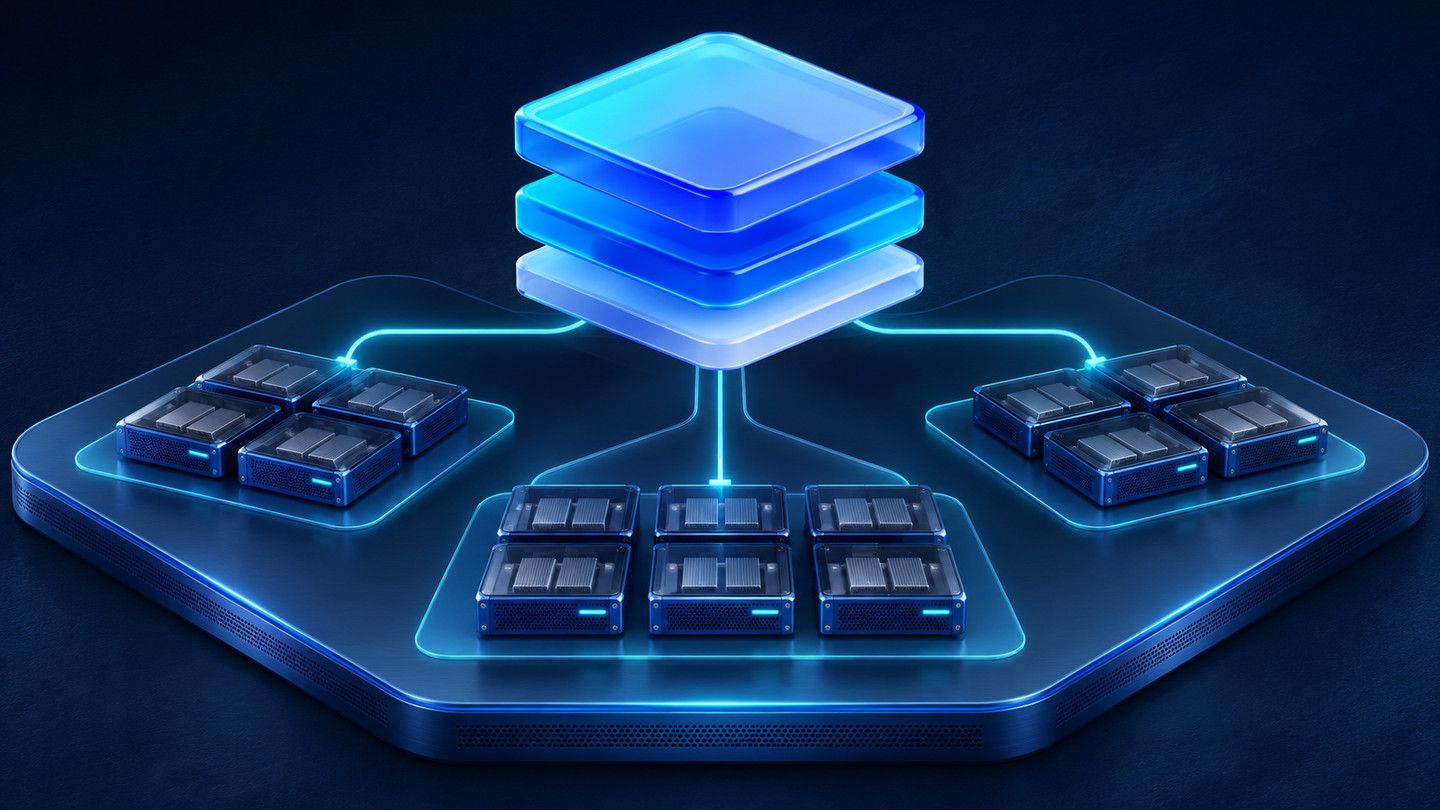
Manage heterogeneous nodes, training jobs and online services within a single managed cluster. The illustration shows a conceptual view of compute scheduling.

Bring Diverse Compute Resources into One Managed Cluster

ECP supports NVIDIA accelerators and a range of accelerator cards developed in China, integrating SenseCore's RDMA networking with AFS and AOSS storage. Teams can spend more time on training and deployment while the platform centrally manages cluster resource allocation, job scheduling and service scaling.

Explore SenseCore Product Details

High-Performance Heterogeneous Compute Nodes

Choose CPUs, GPUs and accelerator cards developed in China to suit each workload, backed by high-performance SSDs and a dedicated training network. RDMA reduces communication overhead in distributed training.


Allocate Compute Resources by Workspace

Allocate nodes and cluster resources to different teams. Schedule jobs within a shared resource pool using prepaid and pay-as-you-go options, idle resource sharing and queues with multiple priority levels.

Accelerate Training and Recovery

Reduce troubleshooting and job recovery time after failures with accelerated checkpoint reads and writes, communication optimization, environment and job health checks, and automatic retries.

Continuously Deploy Inference Services

Manage inference services with health checks, failed replica recreation, traffic removal and version update strategies. Scale instances based on metrics or schedules.

From Training Jobs to Online Inference

Choose a cluster configuration to suit your training, inference, and team resource management needs.

01

AI Model Training

Support large models and a range of job types with training frameworks such as PyTorch and TensorFlow, distributed communication optimization, and job retry and recovery capabilities.

02

Continuous Model Deployment

Package models as containerized services and adjust replica counts based on request volume or time of day. Health checks and version update strategies accommodate changes in traffic and releases.

03

Compute Resource Management Across Teams

Create workspaces within a shared resource pool, set different queue priorities for training and online services, and allocate and share resources on demand.

01 / 03

Product Inquiry

Plan training, inference, and cluster resourcesDiscuss node types, queues, and deployment options

Frequently Asked Questions

Learn what to consider before selecting a solution and planning your deployment.

Which workloads are ECP and ECS best suited for?
ECP provides unified scheduling for containerized training and inference jobs. ECS offers independently configurable cloud server instances for development environments, general-purpose services, and workloads that require you to manage your own runtime environment.
How are training jobs recovered after a failure?
ECP provides environment and job health checks, issue diagnosis, and automatic retries, along with accelerated checkpoint reads and writes. The recovery method and time depend on the job configuration, failure type, and checkpointing policy.
How can training data be made available to a cluster?
ECP integrates with SenseCore's AFS and AOSS. Choose parallel file storage or object storage for training based on your workload. Evaluate the appropriate access method based on your data read/write patterns and cluster configuration.
Managed Kubernetes Service ECP | SenseTime SenseCore