
ACE Robotics Makes Its World Robot Conference Debut: Demonstrating Full-Stack Embodied Intelligence Capabilities from World Models to Commercial Deployment
On August 19, ACE Robotics made a major appearance at the 2026 World Robot Conference, showcasing the Kairos World Model 3.1, Ambient Data Collection Solution 2.0, and three industry solutions—"Xiaoman” “Xiaoxin” and “Xiaotu” —for instant retail, hotel services, and open-world scenarios.
Throughout the event, ACE Robotics’s booth drew large crowds and became one of the conference’s most popular destinations. The Kairos World Model 3.1 attracted sustained interest from professional attendees, investors, and robotics professionals. The Ambient Data Collection Solution also prompted extensive inquiries from embodied AI companies. In particular, the “Xiaoman” solution for instant retail drew a steady stream of customers and visitors, with on-site discussions continuing to gain momentum.
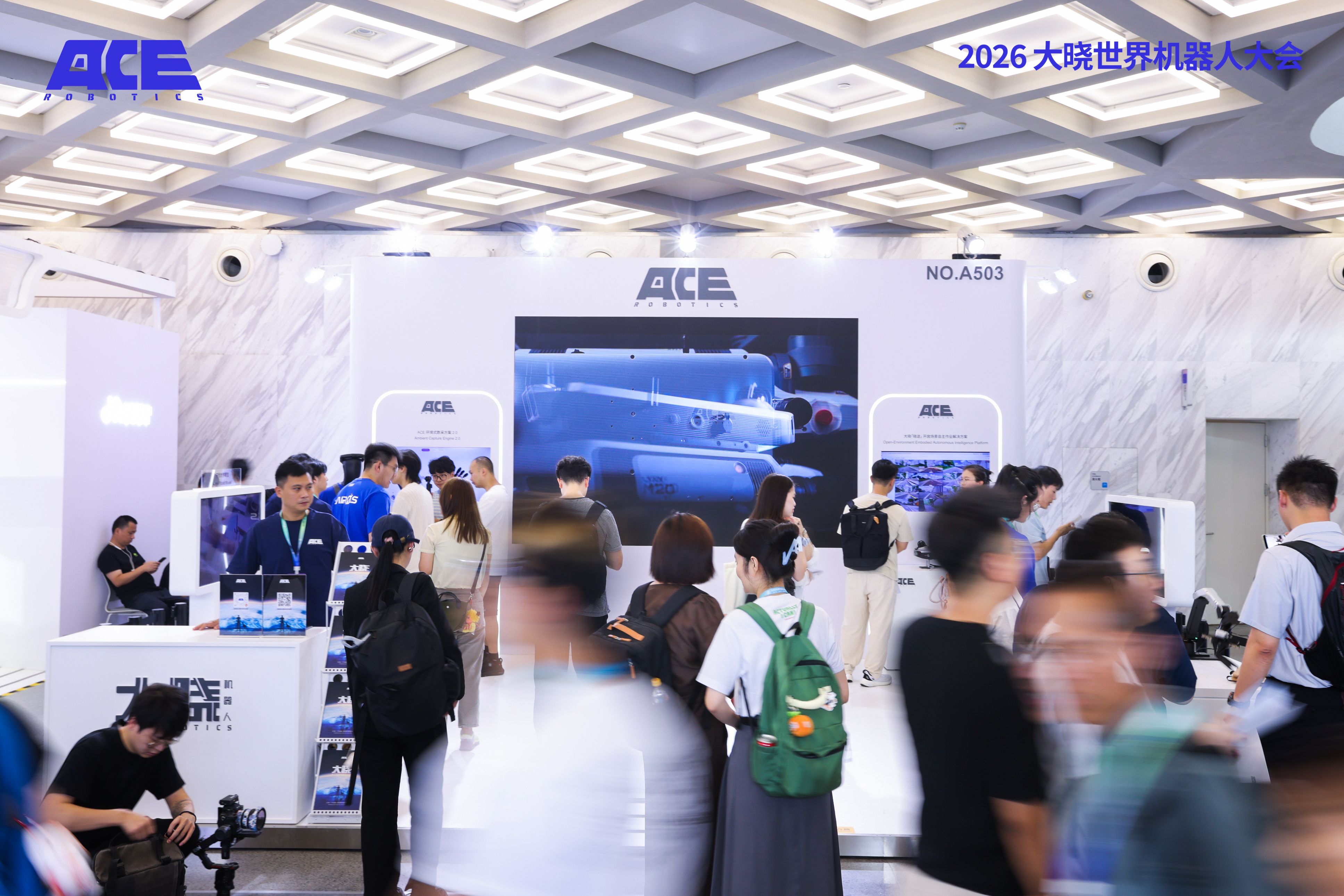
ACE Robotics’ “human-centered” data paradigm sparked widespread discussion. Data is no longer simply an accumulation of information such as images and text. Instead, it incorporates real-world human actions, environmental states, physical laws, and causal relationships from a human-centered perspective, creating a three-tier “data pyramid” comprising open-world video, human–robot interaction data, and real-robot data. This helps models move from “describing the world” to “understanding and reasoning about the world.” As a result, improvements in world-model capabilities no longer depend solely on real-robot data; the input of high-density human data is enabling new forms of emergent intelligence.
From the Kairos World Model and Ambient Data Collection Solution to its three industry solutions, ACE Robotics is building an industrial flywheel linking real-world deployment, high-quality data feedback, world-model evolution, and replication at scale. By testing robot capabilities in real commercial scenarios, using high-quality embodied data to drive model evolution, and deploying its continuously improving “most powerful brain” across more application environments, ACE Robotics is accelerating the adoption of robots in real commercial settings, including retail, hospitality, and urban governance.
As the centerpiece of ACE Robotics’ first appearance at the World Robot Conference, Kairos World Model 3.1 became a major focus of attention at the booth.
The model integrates generative, physical, and cognitive intelligence. Built on a native unified architecture, it connects the capabilities of understanding, generation, and prediction, compressing multimodal embodied data—including visual observations, language instructions, force and touch states, and policy trajectories—into a unified latent space. This enables deep integration of world understanding, physical generation, and action prediction at the foundational level. Kairos 3.1 also establishes a self-evolving closed loop covering the full cycle of “understanding–reasoning–execution–reflection.” When execution fails, it can autonomously identify problems and iteratively optimize its action strategies, enabling the robot’s brain to continuously evolve through real-world operations.
Kairos World Model also ranked first on authoritative embodied intelligence benchmarks worldwide for both world-model video generation and state prediction, outperforming leading global world models including Cosmos3, PI, MotuBrain, being-H0.7, Abot, Fast-WAM, and Wan2.2. The model has also been open-sourced for the entire industry.
At the event, industry professionals and investors engaged in in-depth discussions on the model’s technical architecture, spatial understanding, physical simulation, and commercialization capabilities. Built on the ACE-BRAIN-0.5 spatial understanding foundation and the Kairos-HomeWorld capabilities for physical generation and simulation, the robot can perform multi-step tasks in real-world settings such as the home, while tracing execution states, identifying anomalies, and recovering from task failures. In a parallel environment, the model can also simulate multiple action trajectories, select the optimal solution, and then deploy it to the physical robot.
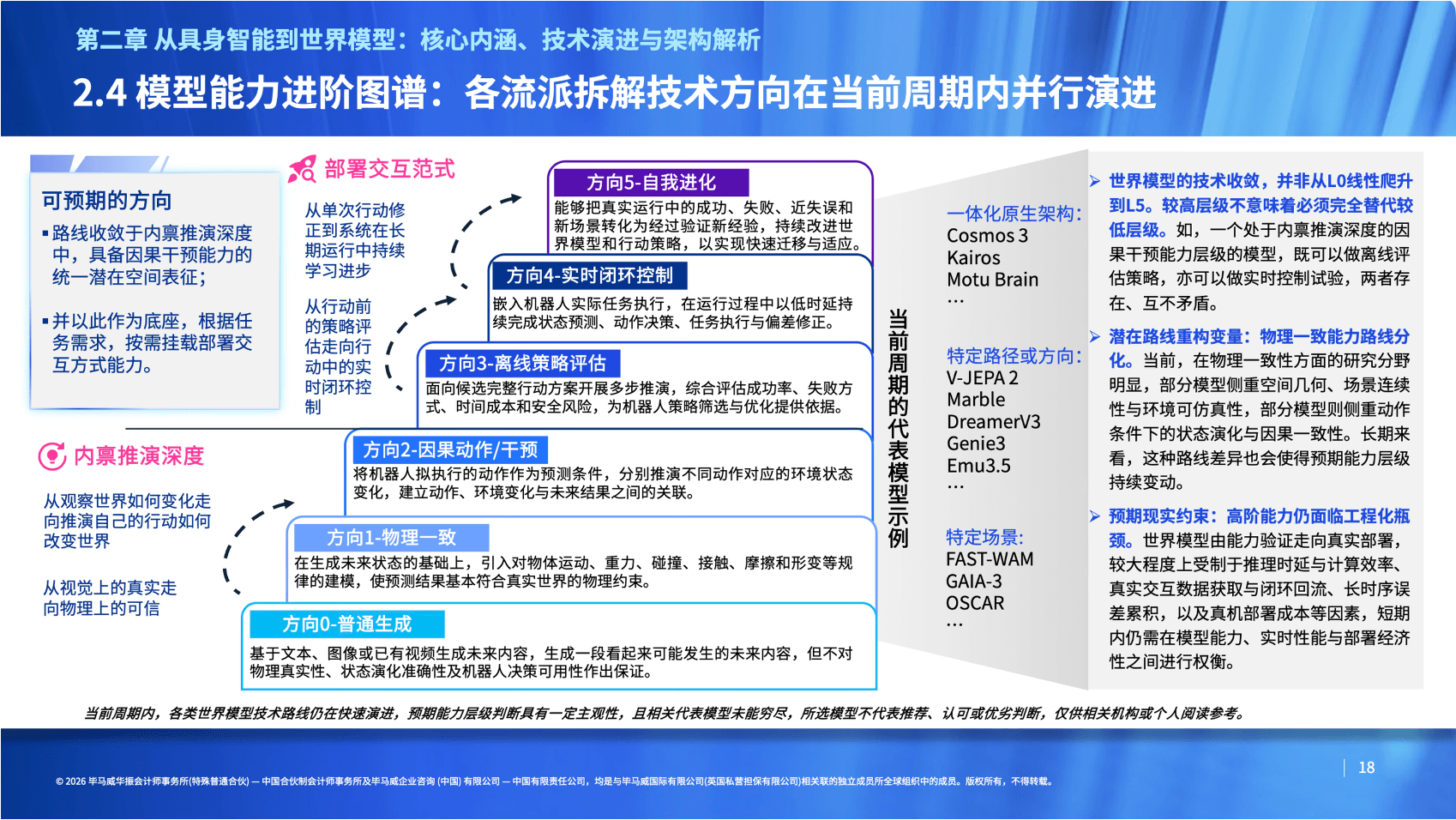
This approach has been recognized by KPMG, a leading global consulting firm. In its recently released report, “How World Models Are Reshaping the Embodied Intelligence Industry and Creating New Business Paradigms”, KPMG notes that embodied world models are continuously evolving toward physical consistency, causal intervention, offline policy evaluation, real-time closed-loop control, and self-evolution. They are advancing from single-generation capabilities toward integrated intelligence encompassing understanding, simulation, execution, and reflection. Native end-to-end integration is an important direction in the evolution of world models, and the Kairos world model is one representative example. Through the native integration of multidimensional capabilities and a self-evolving closed loop, Kairos ranks among the industry」s leading world models and represents a frontier direction for embodied intelligence foundation models.
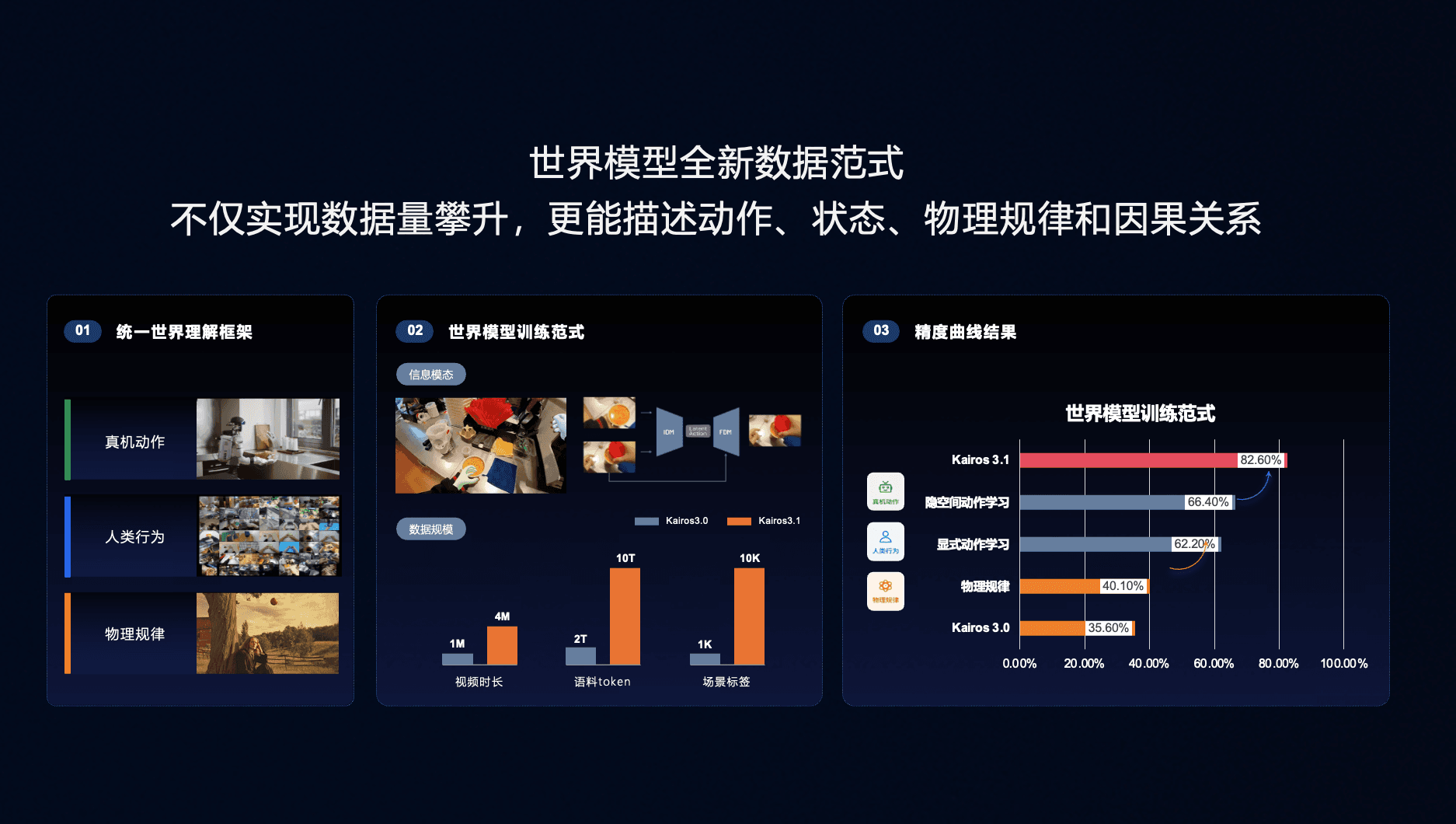
The data paradigm underpinning world models has sparked extensive industry discussion. In terms of data scale, the Kairos 3.1 training paradigm has expanded significantly. The volume of video data has grown from approximately 1 million to 4 million items, the number of language tokens from approximately 2 trillion to 10 trillion, and the number of scene labels from approximately 1,000 to 10,000. Expanding the volume of human-centered data provides a foundation for the model to learn a richer range of movements, task logic, and environmental states. The addition of high-density data on real-world actions, physical laws, and causal relationships further advances the model from single-modality learning toward comprehensive reasoning for embodied intelligence.
This also reflects the scaling law of world models: as the volume of data continues to grow, and its multimodality, scene coverage, and physical information density improve in parallel, the model」s ability to understand actions, states, and physical laws will improve systematically.
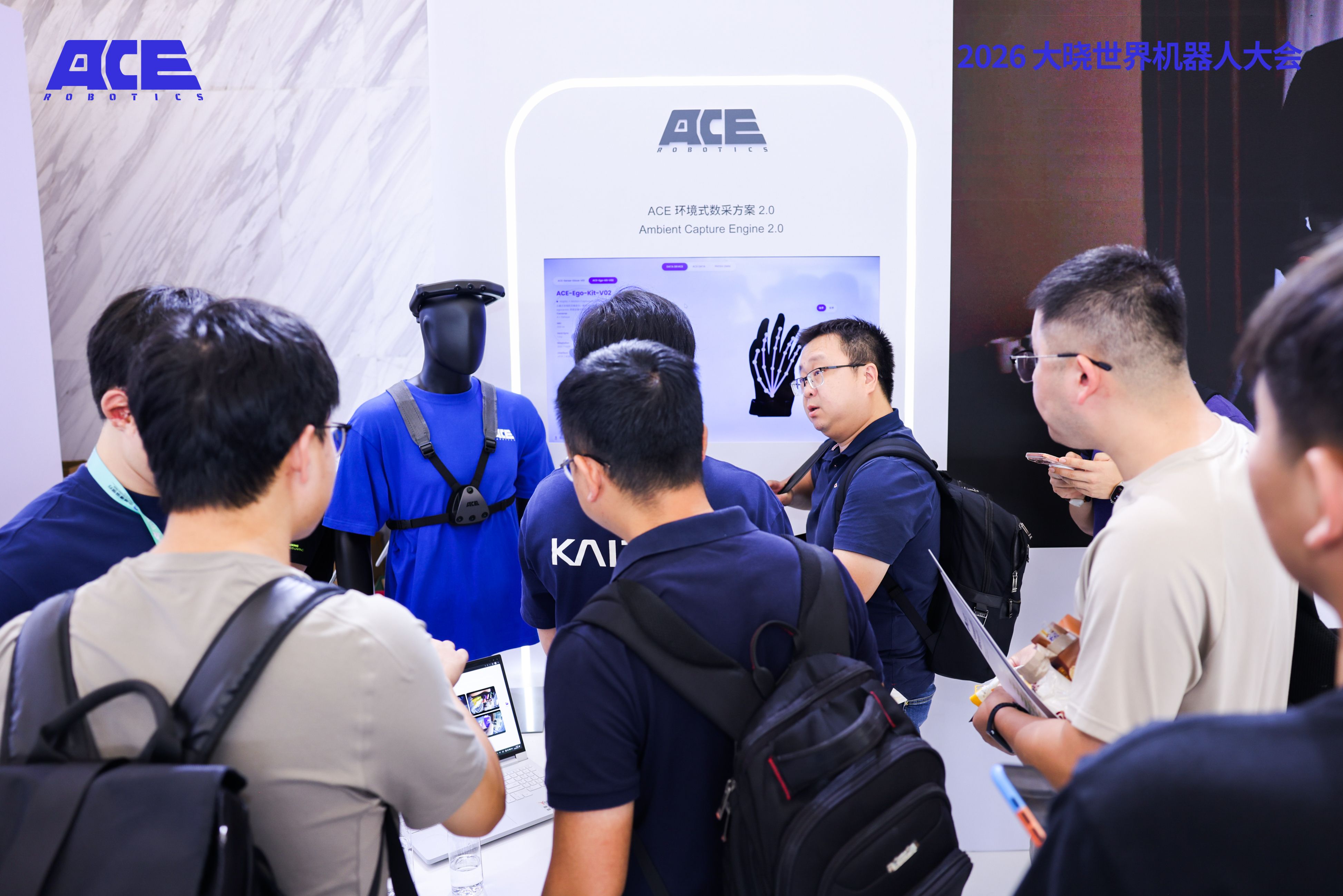
Environmental Data Collection Solution 2.0 also became one of the most frequently consulted exhibits at the booth.
Built around comprehensive capture, fine-grained annotation, and effective utilization, ACE Robotics has created a complete pipeline spanning data collection, automated annotation, and cross-platform deployment with the ACE Ego Kit, ACE Data Engine, and ACE Ego Matrix. This data foundation supports the training, reflection, and continuous evolution of world models.
On-site staff provided in-depth demonstrations and explanations addressing the issues of greatest concern to embodied intelligence companies, including data quality, long-horizon task annotation and cross-robot adaptation. ACE Ego Kit captures high-density interaction data, including visual, motion and 3D force-tactile information. Addressing the industry’s widely discussed tactile sensing needs, ACE Robotics’ ACE Sense Glove—a capture glove and the industry’s first to integrate 3D force-tactile and motion-capture data—was a standout feature. Its ultra-high force-tactile sensitivity of 0.01 N captures even the slightest force variations when fingertips contact soft objects. Joint-angle error of less than 2° ensures highly faithful reproduction of hand movements, while the time-synchronization error across more than 20 heterogeneous sensors is strictly controlled to within 1 millisecond. Together, this triple assurance of modal, scene and temporal density enables the precise capture of high-density, authentic interaction data governed by the causal laws of the physical world.
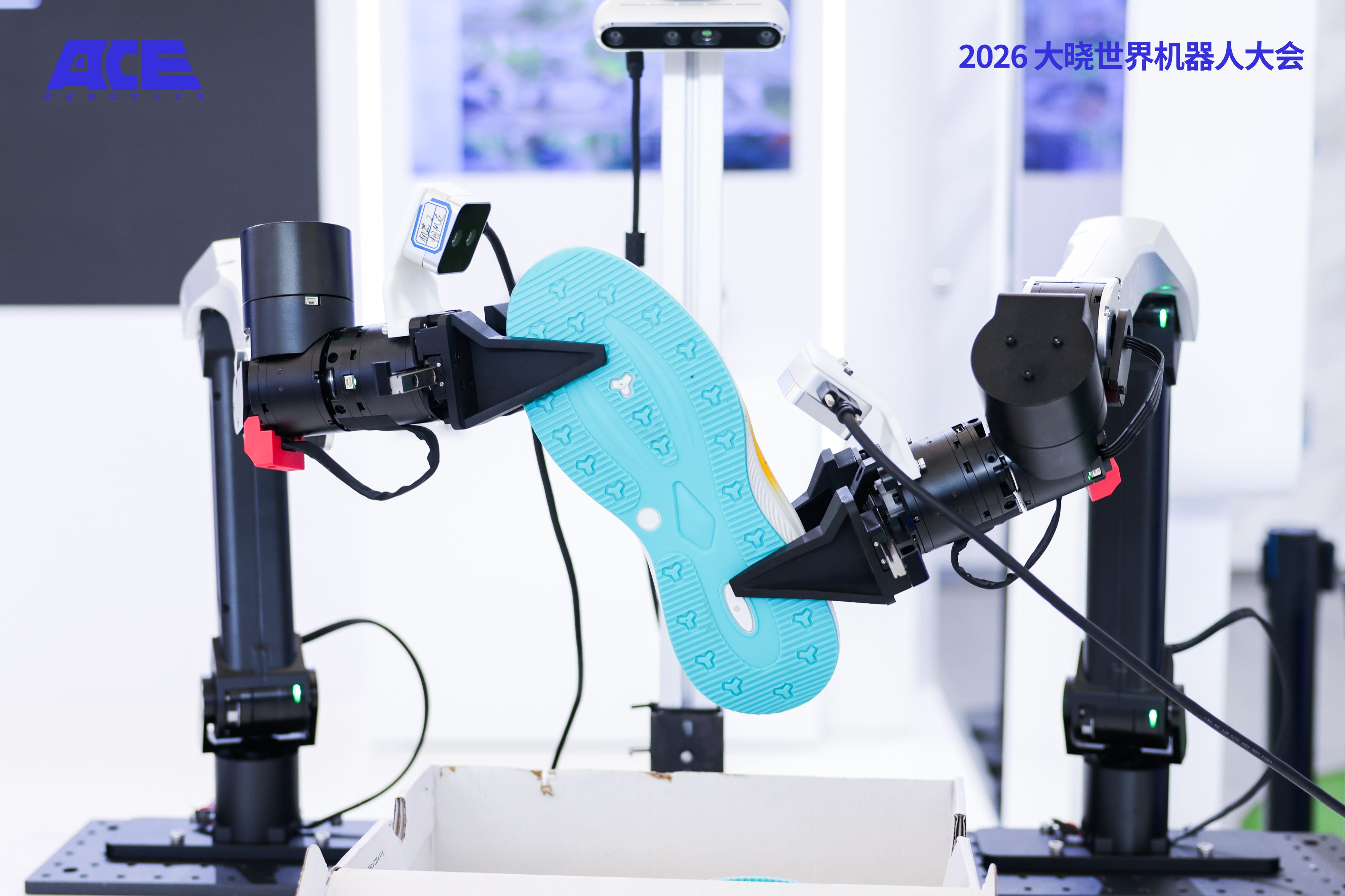
ACE Data Engine delivers full-dimensional annotation of fingers, the body, interaction targets and task descriptions. Its built-in ACE-ViDiHand, the world’s first generative 4D hand-motion-capture paradigm, has achieved three world firsts and overcome the challenges of occlusion and rapid movement. With frame-level accuracy of 0.997, it improves motion smoothness by 4.8 times, making every hand movement in long-horizon, complex tasks clear and traceable.
ACE Ego Matrix unifies spatial coordinates, robot embodiment structure, motion sequences and data quality. Heterogeneous robots operated by different data collectors and at different control frequencies can now be synchronized, enabling genuine alignment between human data and data from physical robots with different embodiments. ACE Ego Matrix took the top position in the RoboCase and RoboTwin benchmarks, demonstrating the value of its “unified language” through model robustness that surpasses industry standards. The solution’s shift from accumulating volume to increasing density sparked in-depth discussions with numerous embodied intelligence companies.
Building on its model capabilities and real-world commercial needs, ACE Robotics has launched three industry solutions—Xiaoman, Xiaoxin and Xiaotu—for instant retail, hotel services and open environments, respectively, exploring the scaled application of embodied intelligence in real-world commercial workflows.
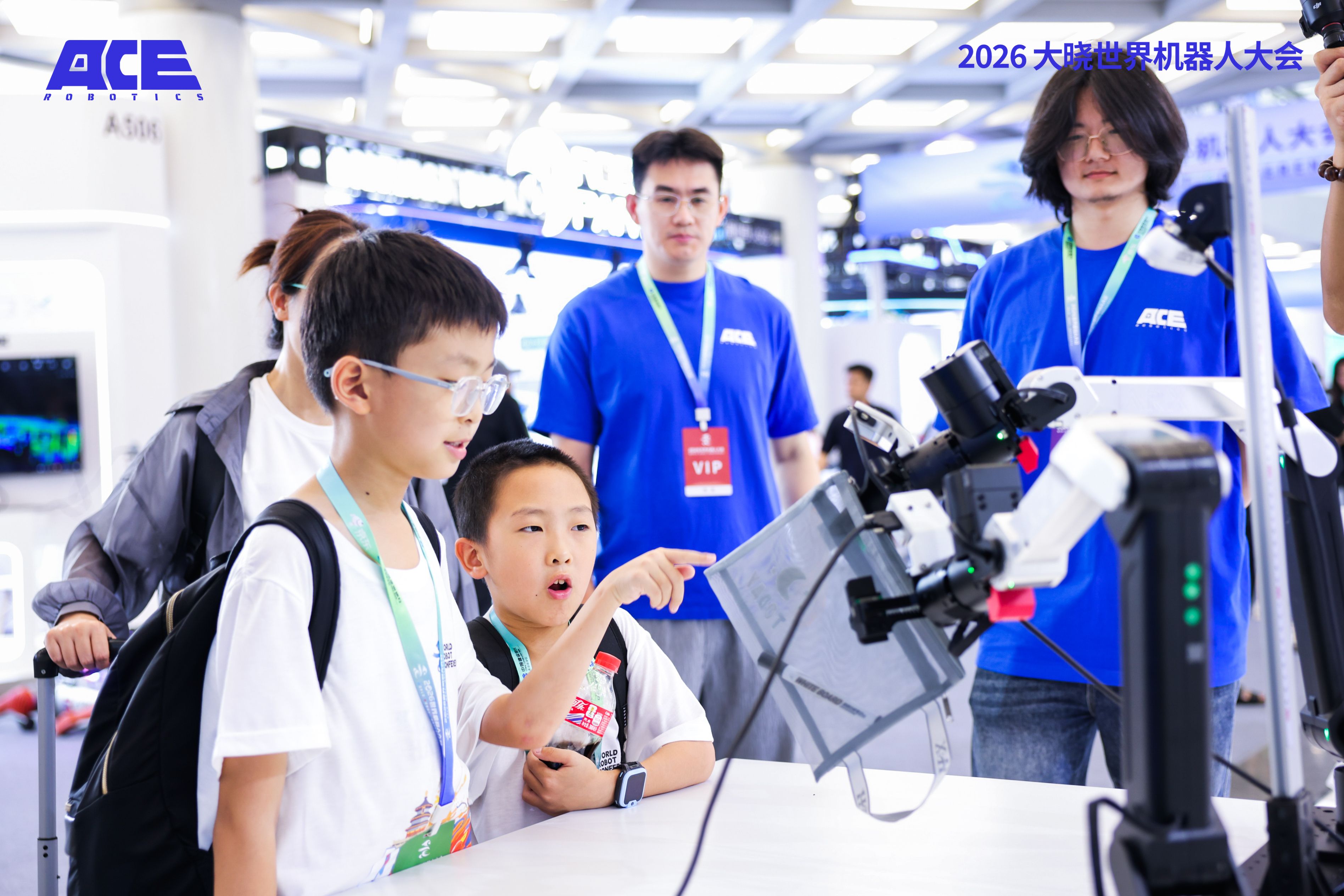
Among them, Xiaoman」s integrated instant-retail fulfillment solution was one of the most closely watched demonstrations at the event. Designed to address challenges including large numbers of SKUs, high-density narrow warehouses and order surges throughout the day, Xiaoman is equipped with the W1 fulfillment robot. It can operate in aisles with a minimum passage width of just 75 centimeters and reliably handle soft packaging and rigid products with force-control precision of no more than 1 N.
Xiaoman」s integrated instant-retail fulfillment solution covers a range of formats, including flash-sale warehouses, dark stores, integrated warehouse-and-store operations and unmanned convenience stores. It has already established partnerships with SenseMart Go, Kuaikedá and PetroChina convenience stores, among others.
Throughout the exhibition, customers and visitors continued to visit the booth to discuss how Xiaoman can improve retail fulfillment efficiency, reduce operating costs and adapt to complex store environments, creating a steady stream of conversations. Xiaoxin enables continuous operations in hotel laundry settings, including collecting, loading, washing, folding and ironing garments.
Xiaotu is designed for outdoor and open environments, supporting multi-form robot adaptation, autonomous navigation, dynamic obstacle avoidance and fleet scheduling. It has already been deployed in urban governance, cultural tourism services and other scenarios.
At its WRC debut, ACE Robotics showcased a complete technological and commercialization pathway for embodied intelligence—from 「understanding the world」 to 「entering industry」—through the Kairos World Model 3.1, its environment-based data collection solution 2.0, and three major industry solutions.